home > inorganic > architectural
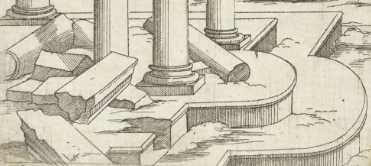
An upright pillar, typically cylindrical and made of stone or concrete, supporting an entablature, arch, or other structure. Can also stand alone as a monument.
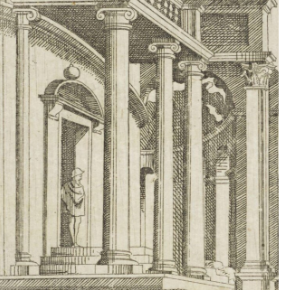
A boss, knob, nailhead, or other protuberance projecting form a surface or part, especially as an ornament.

The base or support on which a statue, obelisk, or column is mounted.

A type of bracket or corbel (often scroll-shaped) that projects from a wall to support a structure above it, like a shelf, cornice, or a sculpture.
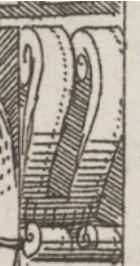


The superstructure of moldings and bands which lies horizontally above columns and consists of the architrave, frieze, and cornice.
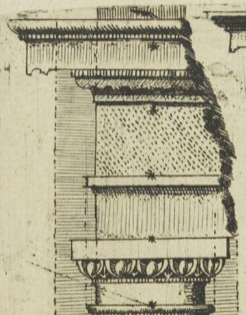
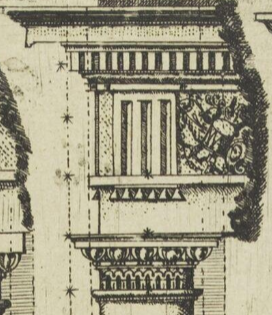
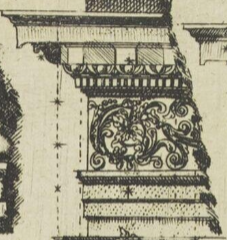
A decorative, channeled block in the doric frieze, characterized by three vertical grooves separated by flat bands.


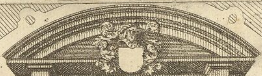
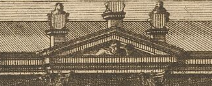
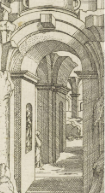

Half of an arch form; 1/4 of a circle.
A decorative recess or hollow in a wall, typically designed to house a statue, vase, or other ornamental object.
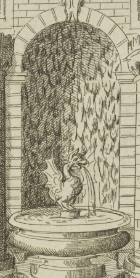
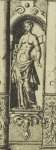
A half-dome, typically used to cover a semi-circular space.
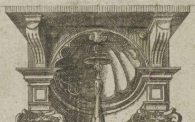
A rounded roof that forms the top half of a sphere, creating a large open space and distributing weight evenly and with structural stability.
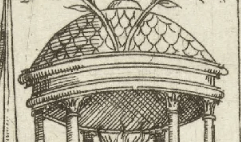
A freestanding vertical structure in a landscape or garden that consists of two or four posts with a simple slatted roof.
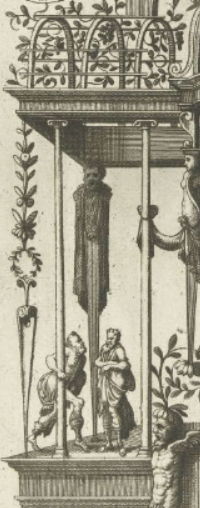
a garden feature forming a shaded walkway, passageway, or sitting area of vertical posts or pillars.
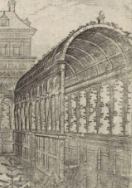

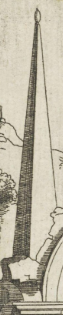
A pre-drilled or punched hole in two or more pieces of material that are intended to be joined together using a rivet.
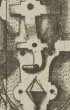
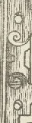
An incised, but not cut, rivet hole. These will look like the outline of a circle, but will be the same color as the strapwork or other material they are drawn on.

A raised level surface on which people or things can stand.
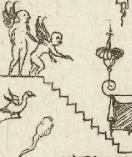
A set of steps leading from one floor or platform to another.
 Ornament : Design : Translation